

Lex presented with symptoms of PTSD—including intrusive flashbacks and avoidance behaviors—following a personal trauma. She had lost motivation, was experiencing a crisis in confidence, and had recently stepped away from her computer programming studies to move back home.
Diagnoses
- Post-traumatic Stress Disorder (PTSD)
- Generalized Anxiety Disorder (GAD)
- Substance Use Disorder (SUD)
Goals: In Her Words
- Work on PTSD symptoms and get life “in order”
- Healthier relationships, be more present and not on my phone all the time
- Get my CompTIAA+ computer programming certificate!
Treatment Plan & Schedule
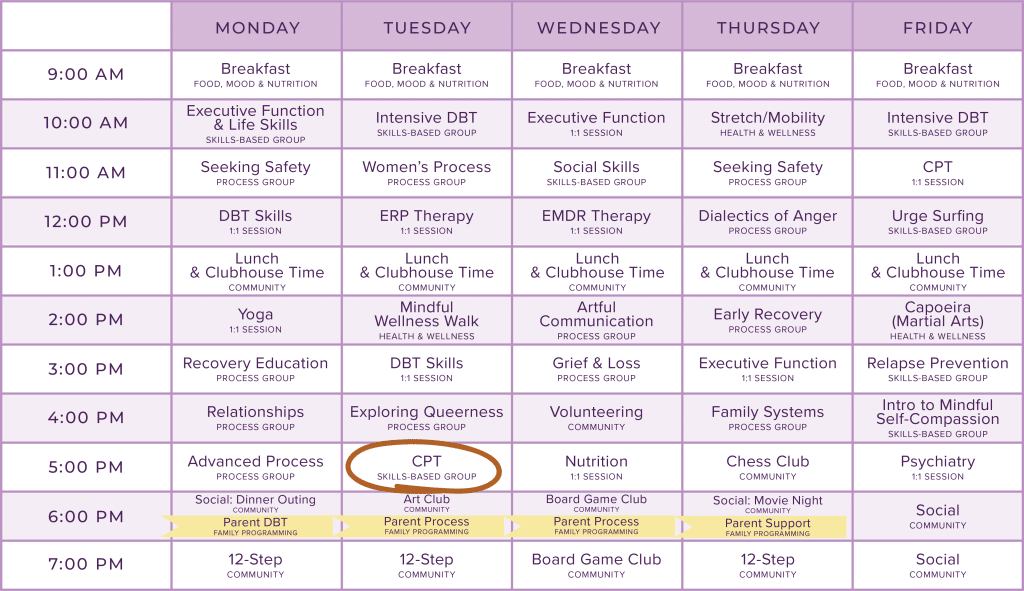
- Lex’s treatment plan integrated trauma-informed care and skills-based modalities to support emotional regulation, nervous system stabilization, executive functioning and substance use recovery.
- Core interventions included EMDR, Seeking Safety, Recovery Education, DBT skills coaching, and ERP therapy for targeted exposure work.
- Movement and mindfulness practices such as yoga, Capoeira, and Stretching/ Mobility reinforced grounding, while groups like Grief & Loss and Artful Communication fostered both emotional expression and relational connection.
Group Highlight: Cognitive Processing Therapy (CPT)
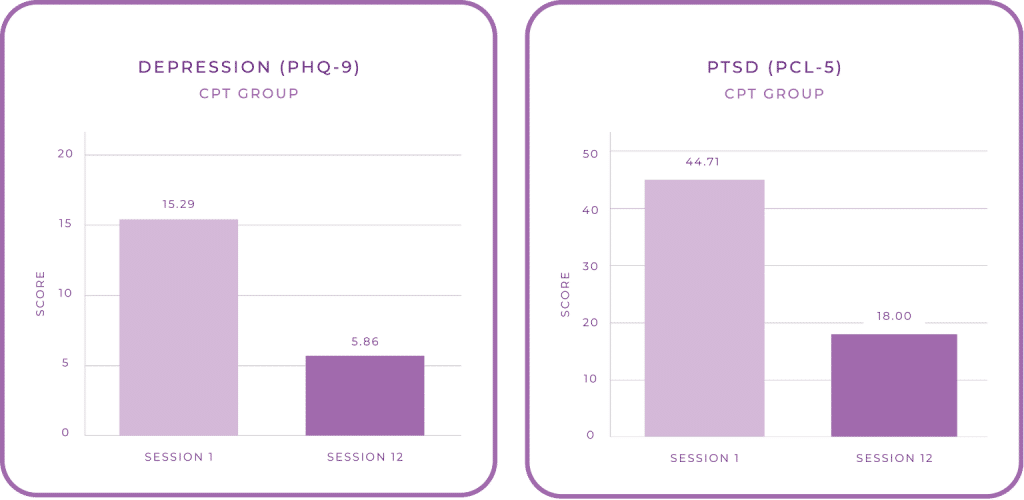
CPT served as a powerful therapeutic intervention that helped Lex process traumatic experiences and reshape unhelpful core beliefs. She reported a significant decrease in symptoms over the 12-week curriculum and learned alongside peers as they worked to replace “stuck points” with more balanced perspectives and improved trauma trigger navigation.
As a structured, evidence-based therapeutic group, CPT helps The Dorm clients achieve meaningful improvements in mood, cognitive processing, and daily functioning. Through this curriculum, our clients report a sixty-two percent reduction in symptoms of depression and sixty percent reduction in symptoms of PTSD.
Lex Today: In Her Words

Once I was able to face my trauma and PTSD, I finally started to see progress. The therapists and community called me out on my avoidance and denial, which I was able to accept because of the trust we’d built together. Now I’m in school full-time, studying for my certificate, interning 30+ hours a week and able to enjoy a closer relationship with my family.