
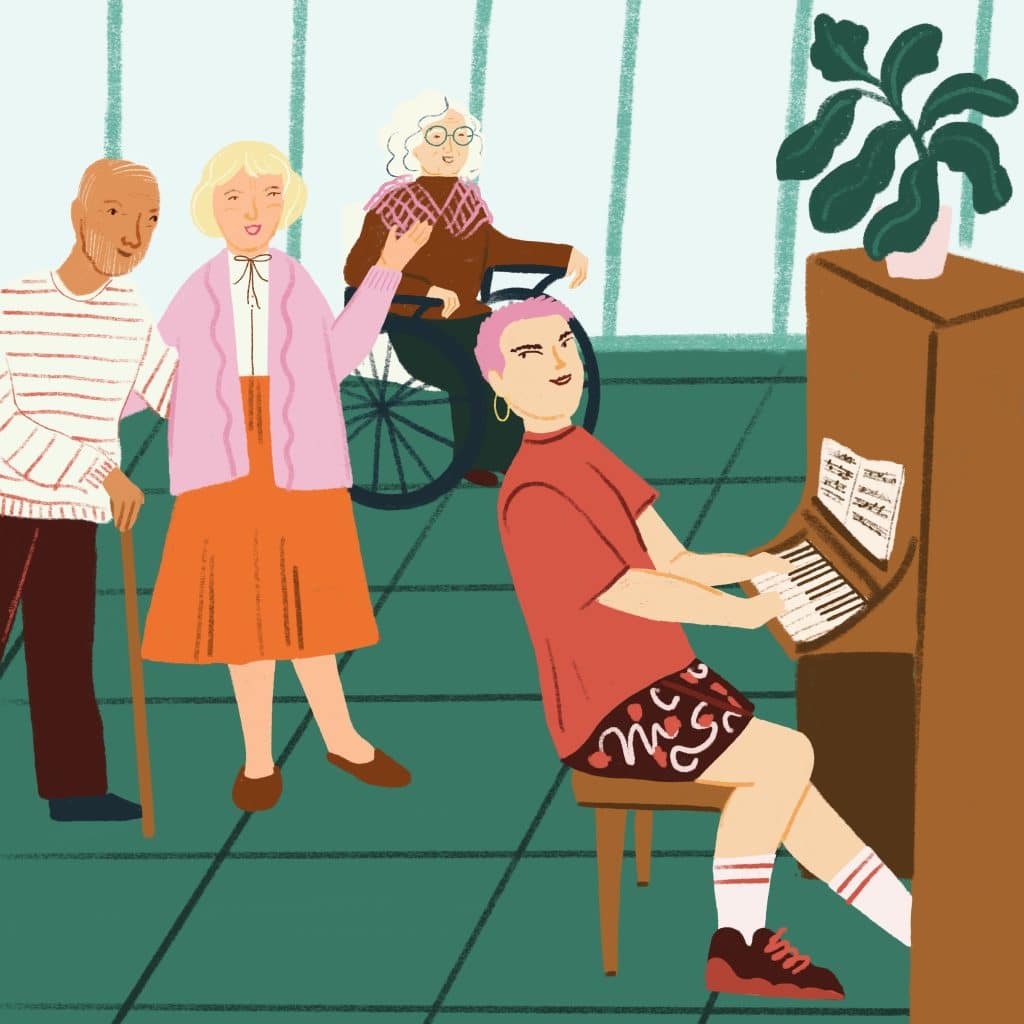

In the wake of a first psychotic break and inpatient treatment, Sydney joined The Dorm feeling stuck and in need of support to ease back into their studies and rebuild relationships with their family. They hoped to reengage in the activities that once brought them joy—music and teaching piano.
Diagnoses
Goals: In Their Words
- Volunteer and go to grad school for music therapy
- Make friends and build my support system
- Mend broken ties with family
Treatment Plan & Schedule
- Sydney’s treatment plan focused on skill-building, reality testing, and structured community engagement to support functional recovery and ADHD management.
- Their core interventions included CBT, Family Therapy, and Activities of Daily Living (ADL) and Life Skills Coaching, with a large emphasis on medication management.
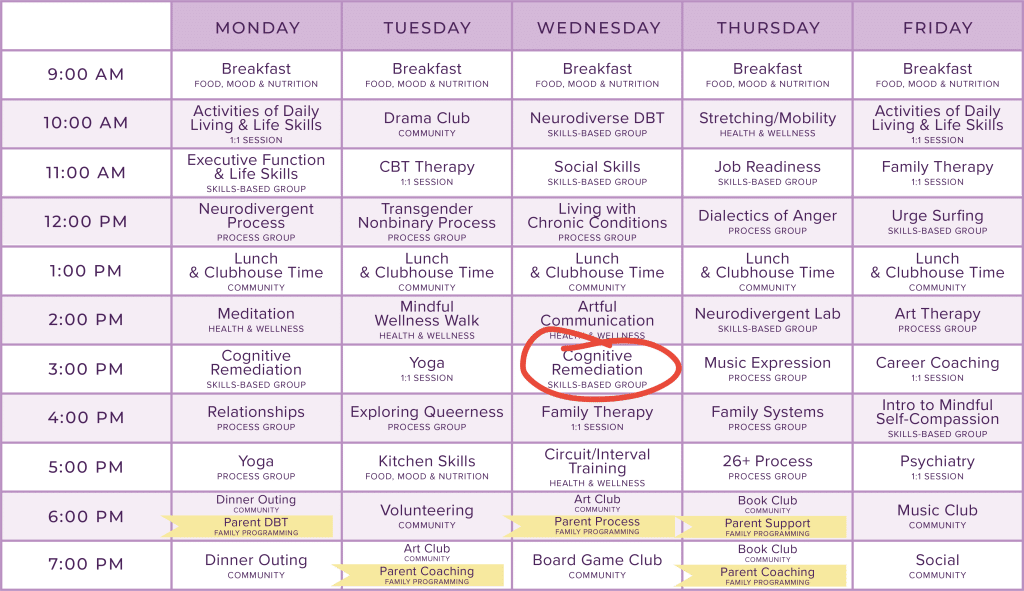
- Weekly volunteering, music club and Music Expression group, yoga and Stretching/Mobility, and 1:1 career coaching helped foster grounding, connection, and daily life skills.
- Cognitive Remediation played a significant role in strengthening critical components of Sydney’s daily functioning such as attention, memory, and problem-solving abilities.
Group Highlight: Cognitive Remediation Therapy (CRT) Group
After experiencing residual cognitive deficits following their psychotic episode, Sydney benefited from Cognitive Remediation Therapy (CRT) Group. They quickly saw improvements in cognitive functioning, attention, and memory after 30 structured, facilitator-led sessions including a 337% improvement in simple attention. As our Partner and Chief Clinical Officer, Dr. Amanda Fialk, LCSW, says, “Despite severely impaired scores at baseline, our CRT programming produces remarkable improvements in simple attention skills— a foundational cognitive function young adults need to thrive and succeed in daily life.”

Sydney Today: In Their Words
Life feels hopeful again. Treatment helped me feel more mentally “sharp” and confident, and family therapy opened the door to better communication and trust with my parents. Most of all, getting involved with social groups, the music club, and volunteer opportunities sparked my love for the piano and teaching again. Now I’m playing at a senior home, working as an accompanist at a dance school, and making plans for the future!