

Diego joined The Dorm in the midst of a severe depressive episode, which had exacerbated his anorexia symptoms and led to a medical leave from college. In the wake of the disruptive pandemic years, he felt aimless, lacked structure, and was socially isolated from his peers and school community.
Diagnoses
- Anorexia Nervosa
- Obsessive Compulsive Disorder (OCD)
- Major Depressive Disorder (MDD)
- Trichotillomania
Goals: In His Words
- Work on ED, depression, and find a way to get back to school
- Manage trichotillomania, OCD, and perfectionist tendencies
- Resume a “normal” routine again
Treatment Plan & Schedule
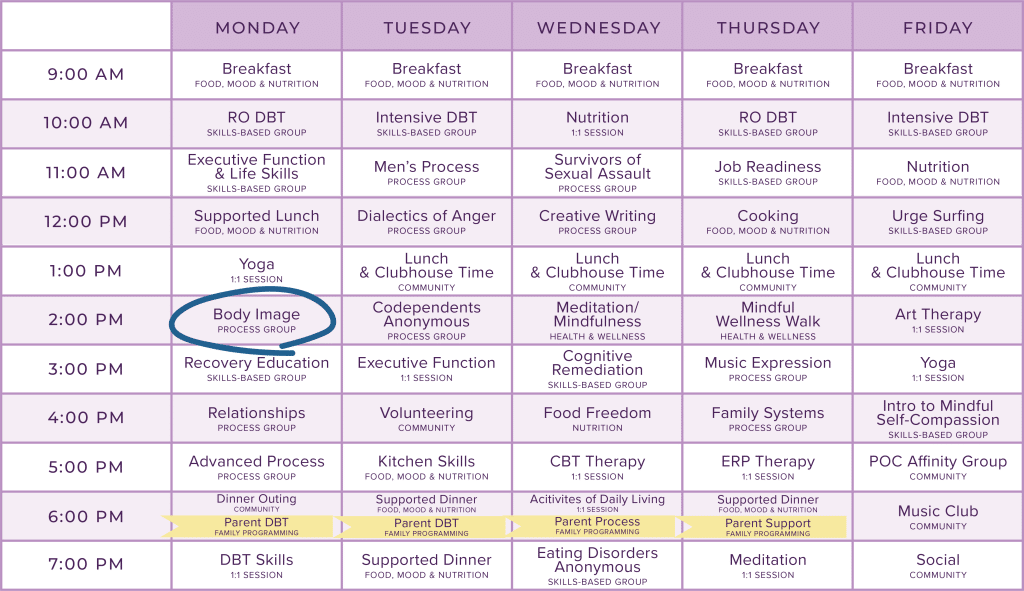
- Diego’s treatment plan integrated eating disorder recovery and behavioral interventions for OCD and trichotillomania through RO-DBT, CBT, and exposure-based therapy.
- Core groups such as Body Image and Urge Surfing supported emotional regulation, insight, and behavior change, while 1:1 executive function, DBT skills, and nutrition coaching fostered individualized accountability.
- Creative and somatic outlets like Yoga, Creative Writing, and Music Expression further reinforced self-regulation and self-trust.
- The Body Image Process Group played a critical role in helping Diego explore his relationship with his body, addressing deeply held beliefs he had about himself, in a way that more structured therapeutic approaches had not previously uncovered.
Group Highlight: The Body Image Process Group
The Body Image Process Group was a critical resource for Diego, who had never experienced such an immersive peer environment engaging in deep discussions about living in a body, as well as stigma, diet culture, and societal expectations. The experience helped reduce shame in other areas, including his OCD compulsions and trichotillomania.
BODY IMAGE GROUP GOALS
- Explore the connection between body image, food, and mood
- Set personalized goals for improving body image and self-esteem
- Build self-compassion and reduce negative self-talk
- Develop strategies to navigate body image triggers
- Process the experience of living life in a body through connection and peer support
SKILLS GAINED THROUGH GROUP
- Increased ability to manage body image triggers in daily life
- Reduced negative self-talk and greater self-compassion
- Decreased body dissatisfaction and reliance on harmful behaviors
- Strengthened sense of community and shared understanding
- Improved relationship and sense of comfort with food, body, and oneself
FEEDBACK FROM THE DORM CLIENTS
- 93% of clients felt supported by an affirming and nonjudgemental community of peers
- 87% of clients gained the ability to reframe negative self-talk around their body
Diego Today: In His Words
I just wrapped up my first successful semester back at school, and I truly owe it to the progress I made at The Dorm. The in-home support, one-on-one meal sessions, groups, and community were exactly what I needed— they were my lifeline during some of my lowest moments. Now, with my symptoms under control, I feel present and connected—to life and to myself