

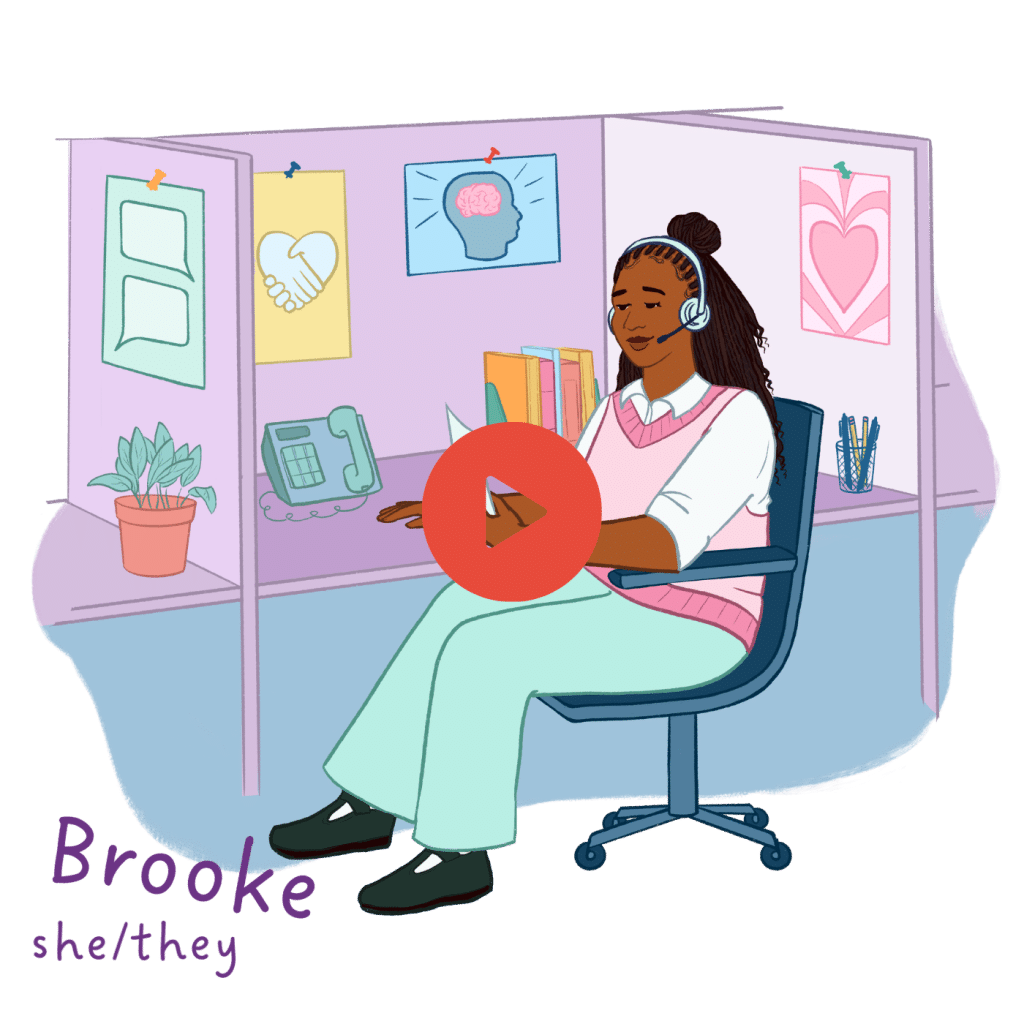
Case Study Video

Brooke at Admission
Brooke arrived at The Dorm struggling with unresolved food avoidance, cycles of weight loss, and waning energy for her schoolwork and personal interests.
For years she had yo-yo’ed between therapists and nutritional providers, but all progress had plateaued due to a lack of synchronized support. Now at a local college studying political science, her academic counselors encouraged her to seek support at The Dorm, so she could finally recalibrate her relationship with food, restore her physical health, and regain the energy she needed to thrive.
Diagnoses
- Avoidant/Restrictive Food Intake Disorder (ARFID)
- Attention Deficit Hyperactivity Disorder (ADHD)
- Generalized Anxiety Disorder (GAD)
- Major Depressive Disorder (MDD)
- Post-Traumatic Stress Disorder (PTSD)
Goals: In Her Words
- Try exploring new foods and “let go” of all I’m holding inside.
- Figure out what makes me light up.
- Get better at staying organized, waking up on time, and following through on meal prep!
- Rebuild my social life (AKA go out with friends and actually say yes to plans more often!).
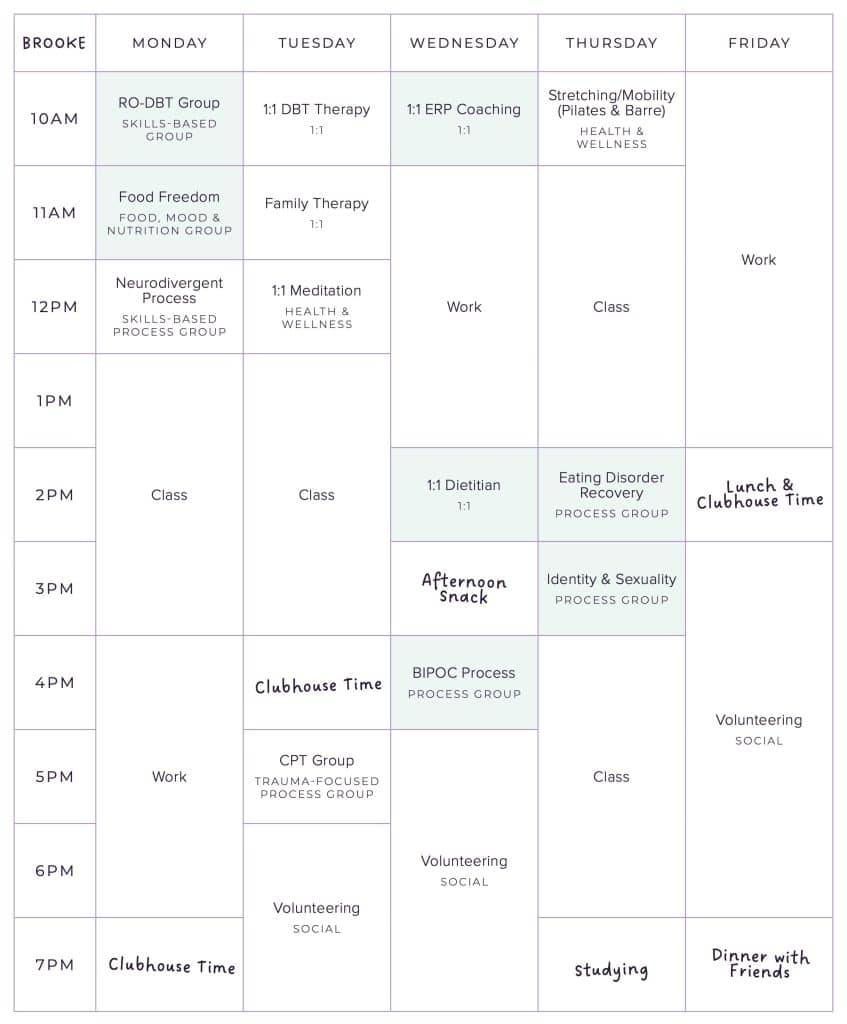
Treatment Schedule
Treatment Journey
- Ingrained, rigid patterns of thinking and overcontrol had always held Brooke back. By engaging in RO-DBT therapy and group work, as well as Exposure and Response Prevention (ERP), she started to experience a shift: greater flexibility, increased self-trust, and a renewed capacity for connection and self-discovery.
- One-on-one dietitian sessions, paired with programming that included Eating Disorder Recovery Group, Food Freedom, and trauma-focused process groups, helped Brooke build insight into patterns that were no longer serving her and learn how to nourish both her body and mind.
- Brooke found a meaningful sense of belonging at The Dorm, actively engaging in Identity & Sexuality and BIPOC Process Groups; in both spaces she felt affirmed as a Black, queer young woman.
- Throughout treatment, programming was able to flex to meet Brooke’s evolving course load, so she never missed a class, a final, or collegiate milestone.
Group Spotlights
RO-DBT Group:
- Rooted in Radically Open Dialectical Behavior Therapy, this group targets maladaptive overcontrol by building openness, flexibility, and social connectedness.
- Objectives:
- Identify patterns of overcontrol and rigidity
- Increase openness and emotional expression
- Strengthen social signaling and connection
- Skills Achieved:
- Increased awareness of overcontrolled coping patterns
- Greater emotional openness and flexibility
- Improved social engagement and receptivity to feedback
- Objectives:
- 97% of clients recognize patterns of overcontrol and rigidity through newly developed skills and strategies
Eating Disorder Recovery:
- Based in evidence-based treatment with relational and experiential support, this approach targets engagement, connection, and sustained recovery.
- Objectives:
- Increase treatment engagement and participation
- Strengthen sense of connection and support
- Reduce isolation in the recovery process
- Skills Achieved:
- Increased sense of connection within the treatment community
- Greater engagement and participation in recovery
- Enhanced feelings of being seen and supported
- Objectives:
- 100% feel seen, supported, and more engaged in treatment and as a result less isolated in recovery

Brooke Today
Brooke left The Dorm with the physical and mental resilience needed to match her inner drive and ambition. While in treatment, she volunteered for a suicide crisis hotline, which fueled her passion for social and mental health justice. She decided to pivot her longer-term trajectory, concluding her political science degree in tandem with an EMT certification.
To this day, Brooke remains connected with the friends she met at The Dorm, who continue to be a source of support and encouragement, as well as to the causes she felt most committed to in the local Dupont Circle community in Washington, D.C.