
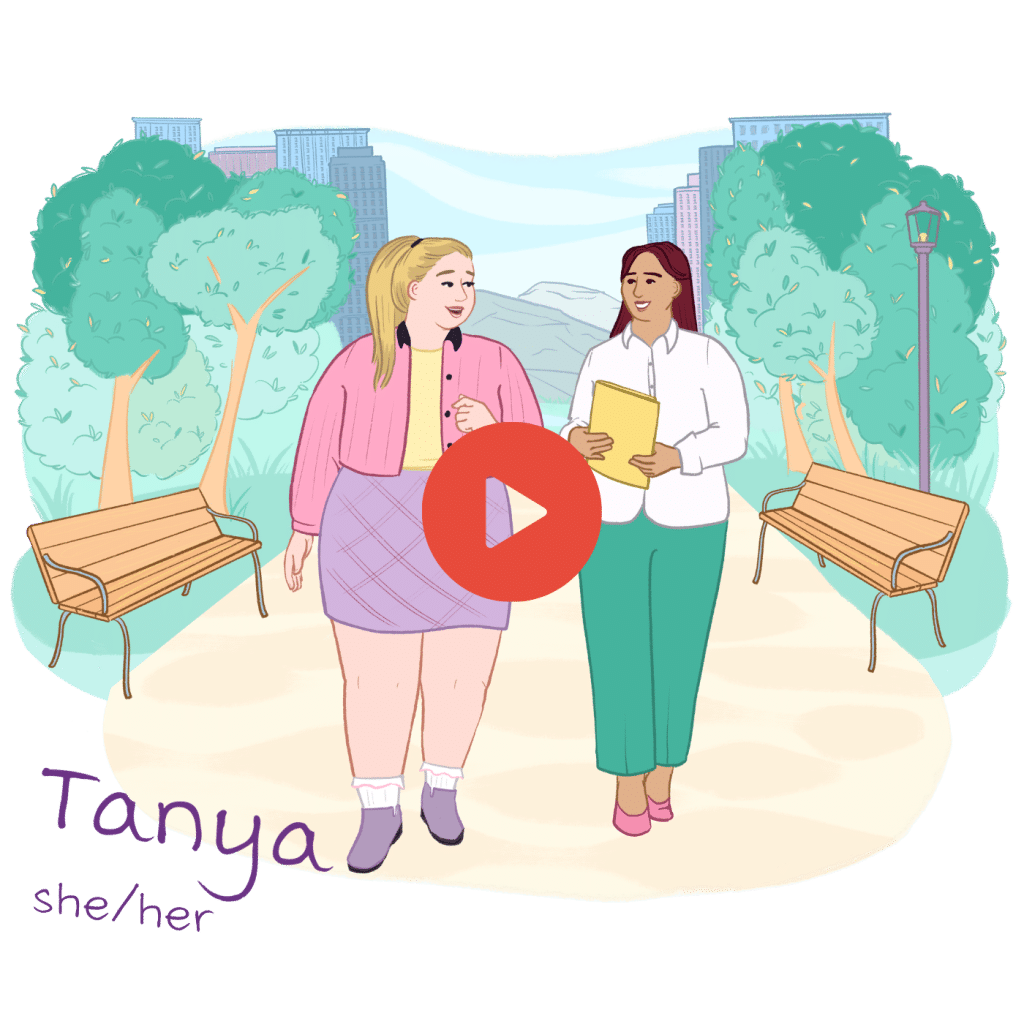
Case Study Video
Tanya at Admission
For as long as she could remember, Tanya had struggled with the reverberations of childhood trauma. When she joined The Dorm, she was in a graduate education program, the image of a “high achiever” who was floundering beneath the surface.
In coordination with her peer mentors and counselling department, she sought out an IOP level of care to help her rebuild a sense of safety and sobriety, and develop healthier coping strategies so she could graduate alongside her cohort.
Diagnoses
- Post-Traumatic Stress Disorder (PTSD)
- Borderline Personality Disorder (BPD)
- Generalized Anxiety Disorder (GAD)
- Major Depressive Disorder (MDD)
- Cannabis Use Disorder (in remission)
- Attention Deficit Hyperactivity Disorder (ADHD)
Goals: In Her Words
- Stay in my program so I can graduate with my friends!
- Need the strength to STAY sober.
- Figure out coping skills versus numbing out.
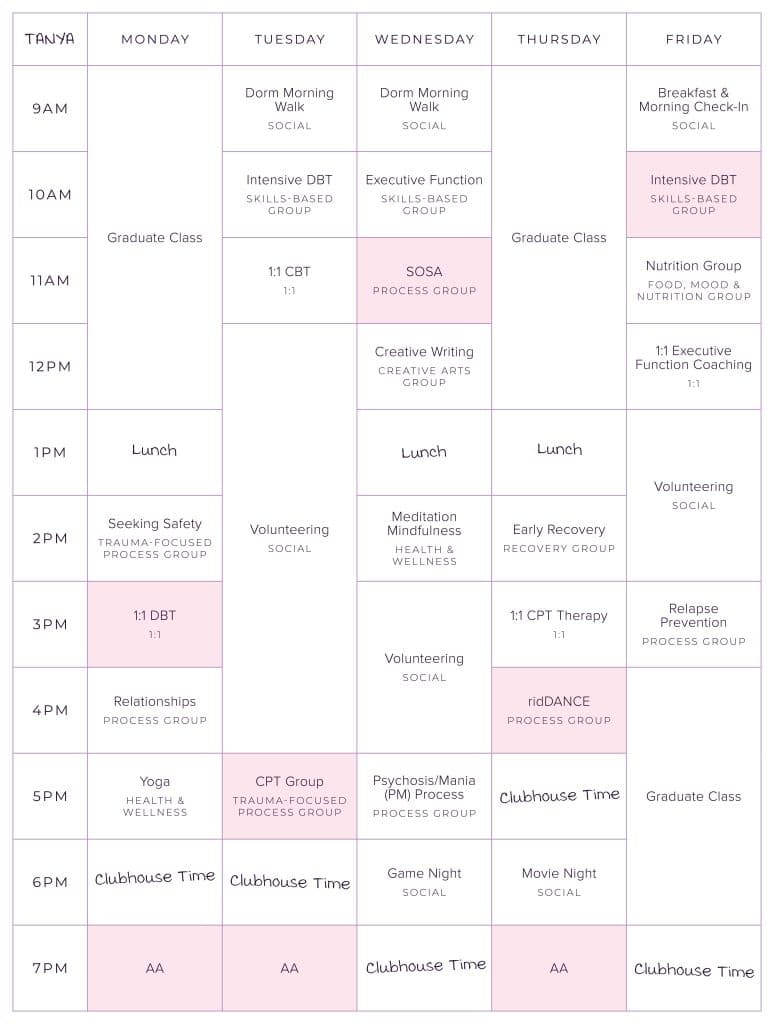
Treatment Schedule
Treatment Journey
- While Tanya was initially skeptical about balancing treatment and school, she became an active participant once she saw the momentum of her weekly DBT therapy and Executive Functioning Coaching. It was exactly the one-to-one guidance and structure she needed.
- Groups such as Cognitive Processing Therapy (CPT) and SOSA alongside weekly family therapy helped her work through trauma stuck points that had long held her back.
- ridDANCE—a dance movement therapy group—compounded her progress, helping her move through the trauma she’d been carrying in her body, not just in her mind.
- Tanya found purpose engaging with community peers in AA and Relapse Prevention groups, as well as while volunteering for causes she cared about, such as the local YMCA kid’s program. Her leadership skills and entrepreneurial spirit began to shine as a peer mentor.
Group Spotlights
Cognitive Processing Therapy (CPT):
- “Where I safely examined and restructured my beliefs.”
- Objectives:
- Challenge trauma-related beliefs
- Integrate traumatic experiences
- Build balanced, adaptive thought patterns
- Skills Achieved:
- Awareness of trauma-related thinking patterns
- Ability to challenge and reframe maladaptive beliefs
- Emotional processing and cognitive clarity
- Objectives:
- -60% reduction in trauma symptoms from first to last group session
- 100% identify how trauma affects their thoughts and emotions to rewrite their trauma narrative
ridDANCE:
- “Where I moved my body for emotional release and went beyond traditional talk-based therapy.”
- Objectives:
- Emotional expression through movement
- Mind-body connection
- Mood regulation and release
- Skills Achieved:
- Emotional release through movement
- Connection to body and self
- Positive mood and sense of well-being
- Objectives:
- 99% clients experience improved mood and therapeutic benefits in ways that are not possible in other forms of treatment
- 100% of clients feel more connected through nonverbal self-expression and shared movement with peers
Tanya Today:
Just as she hoped, Tanya walked at graduation with her peers and completed her Master’s in Education. Today, she remains an active part of the alumni community and serves as an alumni mentor, believing in the power of “giving back” all she was given through care at The Dorm.
What started as weekly volunteer commitments during treatment, have since grown into a fledgling business idea to help local students receive extra after-school support: “Exploring what I loved sparked something in me I never even knew was there! Now I have the confidence to pursue it.”