Emotional intelligence (sometimes called the Emotional Quotient) is the ability to perceive, use, understand, manage, and handle emotions. First coined in 1990 by researchers John Mayer and Peter Salovey, it was later popularized by psychologist Daniel Goleman. Today, it is viewed as a crucial competency that influences how we understand ourselves and connect with others at every phase of life. For example, a child learning to navigate playground disagreements or a young adult managing job interviews both rely on emotional intelligence to respond thoughtfully and effectively. While the foundation is often laid in childhood, the skills that underpin emotional intelligence can evolve throughout life and can always be strengthened.
To explore this further, we spoke with Amanda Fialk, PhD, LCSW, LISCW, Partner & Chief Clinical Officer at The Dorm, to uncover insights into how nurturing the skills that make up emotional intelligence can be fostered in young adulthood.
What does Emotional Intelligence entail?
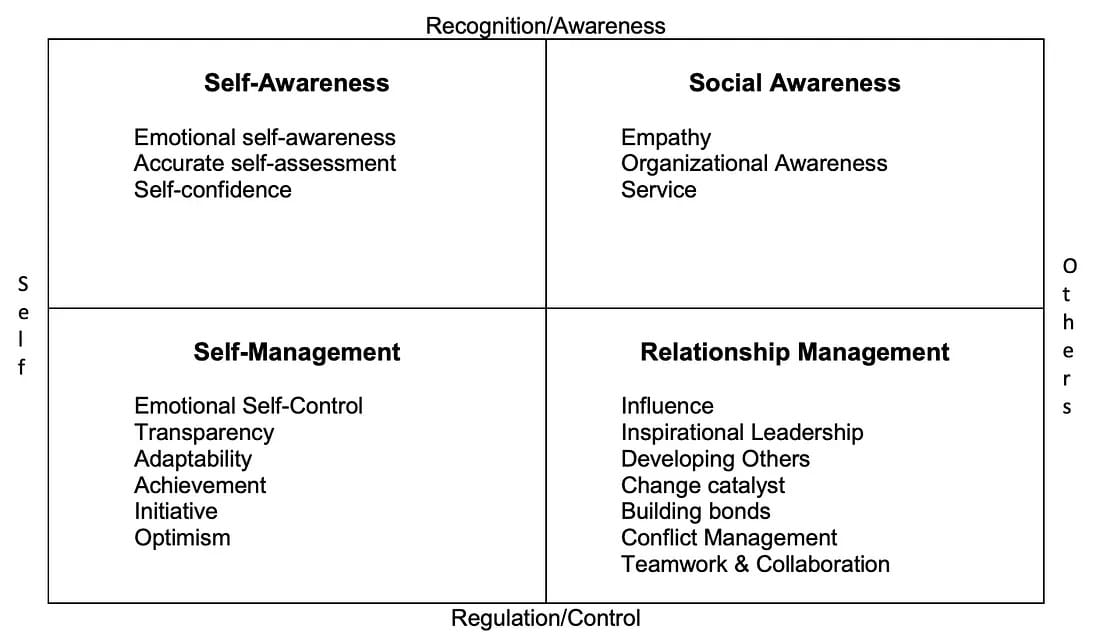
According to Daniel Goleman’s Emotional Intelligence Theory framework, EI highlights four key competencies:
- Self-awareness – the ability to recognize and understand one’s own thoughts, feelings, moods, emotions and drives and how they impact oneself and others
- Self-management (or self-regulation) – the ability to control or redirect one’s own disruptive impulses/moods and think before acting
- Social Awareness & Relationship Management (encompassing social skills and empathy) are deeply interconnected and encompass the ability to effectively communicate needs and wants with others and maintain, manage and develop healthy relationships. This requires the ability to find common ground with others, appreciate and empathize with others’ perspectives and understand their wants and needs.
Each of these skills requires time and practice to develop and is essential for leading a fulfilling and productive life in any environment; school, work, at home. Research suggests that people with a high emotional quotient are more innovative, have higher job satisfaction and feel “happier”.
“There are many evidence-based therapies and interventions that can help young adults develop these skills”, says Amanda. “With time, willingness, commitment and support from professionals, it’s possible to see real shifts and growth in people of any age.”
Daniel Goleman’s Emotional Intelligence Quadrant
1. Fostering Self-awareness Skills
If a young adult cannot understand their own emotions, it makes it harder to regulate them, and identify them in others. Some activities that can help any individual develop these skills include:
- Journaling, processing and reflection: young adults can write and work on processing their thoughts and feelings, either in free-form or in response to prompts. At The Dorm, for example, clients can also discuss these entries with their therapist/coach or in a group setting, to gain new insights into their emotional world.
- Practicing Mindfulness: Somatic therapies and practices like meditation or deep breathing can help young adults learn to tune into their emotions and observe them without judgement. This could take place as part of yoga or a dedicated mindfulness group. Also to be in the moment and understand emotions in the moment versus worrying abt the past or ruminating abt the future
Self-awareness skill in-action: Example
- Maria, a college sophomore, has an important exam coming up. She notices that whenever she studies, she feels overwhelmed and starts procrastinating by scrolling on her phone.
- Instead of ignoring these feelings, she practices self-awareness by identifying her emotions—realizing she’s anxious about not performing well. She uses a distress tolerance skill, paired muscle relaxation, to help her ease her anxiety. Then she reflects on past experiences and recognizes that when she breaks her study sessions into smaller, more manageable chunks and takes short breaks, she feels more in control.
- Using this insight, and executive function skills, she creates a structured study plan with timed breaks and limits distractions, ultimately reducing her stress and improving her focus.
2. Developing Self-Management/ Self-Regulation Skills
Young adults who are unable to manage disruptive emotions, think before acting or redirect moods can struggle in all domains of life, from the workplace to personal relationships. Self-regulation and management skills can be supported therapeutically in different ways including:
Do you or a loved one need help with mental health?
The Dorm is here.
- Teaching Coping Skills through DBT and CBT: Young adults can benefit from learning productive skills for juggling stress and better managing their emotional regulation including movement, creative outlets, or applying concrete skills from the DBT curriculum including STOP, Opposite Actions and practicing positive self talk.
Self-regulation skill in-action: Example
- Starting his first job as a junior software developer, Leo found himself struggling with frustration when he encountered complex coding errors.
- Instead of letting his emotions take over, he applied an emotional self-regulation strategy he had learned in college—pausing and reframing his mindset. When he felt himself getting overwhelmed, he took a deep breath, stepped away from his desk for a short walk, to help reframe and practice positive self-talk, reminding himself that mistakes were part of the learning process.
- By practicing self-compassion and shifting his focus to problem-solving instead of self-criticism, Leo built resilience and gradually became more confident in tackling challenges with a clear, level-headed approach.
3. Social Skills Awareness & Empathy
Social skills are not always innate but are an important part of maintaining healthy relationships and connections with others. Young adults who are able to effectively use social skills such as active listening, turn taking in conversations and effective conflict resolution are more likely to experience better life outcomes, quality friendships and increased social participation.
At The Dorm, supports for developing social skills are wide-ranging and can include:
- Role-Play During Individual Therapy & Clinical Coaching: Young adult clients can practice handling conflicts, giving feedback, or setting boundaries working 1:1 with an expert clinician as part of individual therapy but also through clinical coaching in real-time.
- Groups: Group therapy settings like “social skills” group at The Dorm offer structured yet supportive environments where individuals can practice communication, empathy, and conflict resolution in real time.The group setting can foster active listening, turn-taking, and appropriate emotional expression, all while reinforcing a sense of belonging and reducing feelings of isolation. Through guided discussions and role-playing exercises, individuals can refine their interpersonal skills, learn to navigate social cues, and develop healthier relationships in both personal and professional settings.
- Community Engagement: Practicing social awareness and emphasizing skills in safe, real-time settings like within The Dorm’s community clubhouse, helps individuals become more attuned to others.
- Volunteering: Volunteering can help foster collaboration, empathy, and effective communication. At The Dorm, we encourage clients to volunteer with organizations and causes that speak to their intrinsic personal interests.
Social awareness and empathy in-action: Example
- When Maya noticed her best friend, Olivia, had been quieter than usual and canceling plans, she put her empathy and social awareness skills into practice.
- Instead of assuming Olivia was simply busy or uninterested, Maya reached out with a gentle message, letting her know she was there if she needed to talk. When Olivia finally opened up about feeling overwhelmed with school and family stress, Maya listened without interrupting or trying to immediately fix things. She validated Olivia’s feelings, saying, “That sounds really tough—I can see why you’d feel that way,” and offered her support without pressure.
- By tuning into Olivia’s emotions and responding with understanding, Maya strengthened their friendship and created a safe space for open communication.
Building Emotional Intelligence at The Dorm
At The Dorm our goal is to help every young adult build the skills for a fulfilling, purposeful, independent life, including emotional intelligence competencies that can help every individual navigate work, school and relationships with greater success. To learn more about our approach and programming, contact our team to learn more.