As a full-time student, Felix’s mood disorder, Bipolar 1, meant he had trouble functioning at college. After being treated in a hospital setting, Felix arrived at The Dorm ready to start his sobriety journey and learn life skills to work towards finishing college and joining the school soccer team.
Treatment and Life Goals
During midterms, Felix’s roommates noticed something was off – he stayed awake for days at a time with no sleep, skipped exams, and always seemed to be under the influence of drugs or alcohol. He arrived at The Dorm following an inpatient hospital stay due to his struggles with Bipolar 1, history of trauma, and substance use. Arriving at The Dorm, Felix hoped to build coping skills and a sense of hope to fully engage in his life after treatment.
Drawn to The Dorm’s skills-based, whole-person model, Felix was eager to learn how to manage his Bipolar diagnosis, engage in substance use recovery, and get back on track to return to college the following semester. His goals:
- Learn to cope with Bipolar 1 diagnosis
- Feel better, smile, and be kind to others
- Work towards goal of joining the soccer team at his university
- Go back to school and eventually graduate from college
Treatment Plan and Recovery Journey
Individual Therapy
Dialectical Behavioral Therapy (DBT) played a central role in Felix learning to manage the ups and downs of his Bipolar diagnosis. Using the modules of DBT, Felix started to regulate his emotions and better recognize his own beliefs from intrusive thoughts. As he practiced DBT skills, day-to-day life started to feel more manageable without the use of substances and other harmful habits.
Parent Coaching and Family Therapy
In preparation for living together over summer break, Felix and his family worked on the way they spoke to one another in moments of stress. Both Felix and his parents practiced sharing their needs without making assumptions about one another, a skill that proved useful when he moved back in with them in the summertime.
Group therapy
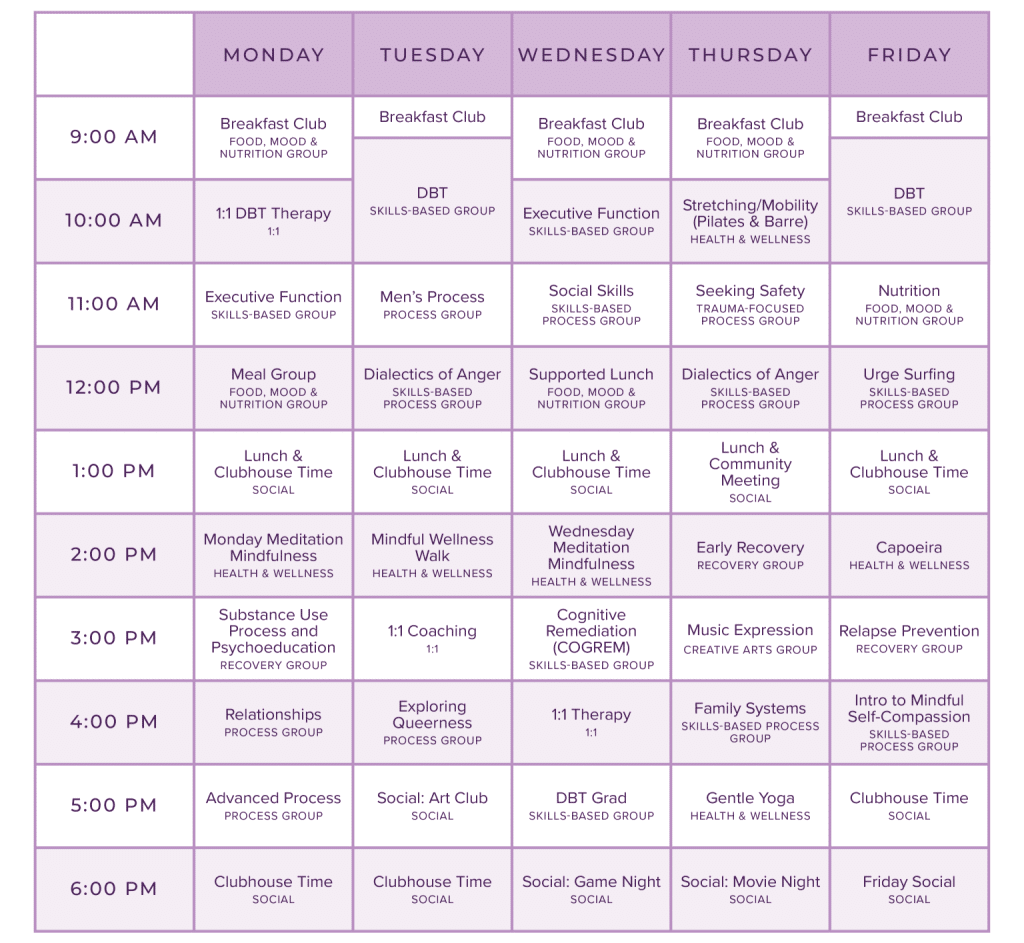
Dialectical Behavioral Therapy (DBT) in the group setting helped Felix feel camaraderie with his peers who also experienced substance use disorders and struggled with mood swings. Together, they worked on healthy coping skills outside of drugs or alcohol in moments of crisis as well as practicing communicating their feelings and needs openly.
Early Recovery Group helped Felix normalize sobriety and work on strategies for managing cravings and triggers with peers who had also dealt with substance use disorders. He felt empowered, knowing that he was not alone in the difficult process of quitting drugs and alcohol.
Family Systems allowed Felix space to examine how family dynamics shape his reactions and impulses to difficult situations.
Relationships Process Group gave Felix the tools to navigate romantic, friendship, and familial relationships using healthier communication strategies.
Executive Functioning enabled Felix to establish a consistent sleep schedule and develop better habits, ultimately leading to his enrollment as a full-time student and participation in extracurricular activities on his college campus
Nutrition Group showed him how to build a healthy lifestyle in a way that felt manageable and open-minded.
February 2026
Community Clubhouse
Throughout treatment, community was a driving force in Felix’s care. He looked forward to feeling able to engage in Greek life on his campus and join the soccer team. Although he felt shy when he first arrived at The Dorm, he eventually made friends with other clients on their sobriety journey and could be found chatting with them between sessions in the clubhouse.
Felix Today: Outcomes
Treatment allowed Felix the chance to work on sobriety, practice healthier coping mechanisms, and find the right medication to treat his Bipolar diagnosis with a psychiatrist – all of which led him to thrive today. Now, he is a full-time student in college, where he has completed several successful semesters. In a healthier state of mind, Felix met new friends to share his college experience with and even joined two sports teams, soccer and track, which have added joy and connection to his college experience. As he adapts to new environments, he continues to apply the mindfulness and life skills that transformed his outlook during treatment.