
After years of instability and isolation, Suki’s mental health was getting in the way of her starting college. Endless conflicts seemed to arise with her parents, Zorah and Ken, who felt she needed to sort out her mental health before starting school. By processing difficult past experiences and learning coping skills, Suki learned to manage her big emotions and now lives independently at university.
Background
Suki had gotten into her dream college. After years of switching high schools, navigating academic settings during the COVID pandemic, and struggling with her mental health, she was eager for a fresh start. But, anxiety and substance use were disrupting her daily life.
Zorah and Ken, Suki’s parents, worried about her living independently at university. They feared that she would avoid responsibility when given the freedom and rely on substances to cope. How would she manage on her own 500 miles away? When they tried to connect with Suki, every interaction ended in a fight. It was Ken’s idea that Suki sort out her mental health before starting her next chapter at college.
Treatment & Life Goals
At the Dorm, Suki aimed to:
- Get her life back on track to handle living independently
- Work towards sobriety
Zorah and Ken hoped to:
- Manage emotions to create a healthier family dynamic
- Learn how to better communicate and support Suki long term
Treatment Plan & Recovery Journey:
Individual Therapy
Dialectical Behavior Therapy (DBT) helped Suki learn practical coping skills to manage her emotions and deal with family conflict.
- In family coaching, Zorah and Ken learned DBT skills to respond calmly and communicate without escalating tension.
- Interpersonal effectiveness, emotion regulation, and distress tolerance were three major DBT ideas that helped the whole family interact more effectively and set realistic expectations with each other.
Case Management (coordinated care) ensured Suki stayed on track with treatment to start college the following fall.
- Suki’s coach and therapist worked as a team, making sure Suki’s college, work, and emotional goals were being met.
Group Therapy
- Seeking Safety Grad, a group for clients to process trauma with others in similar stages of recovery, was necessary for Suki to cope with her life experiences and build self-care skills.
- Dialectics of Anger allowed Suki to face her resentment towards Zorah and Ken for the first time and imagine a path forward.
Suki’s Group Schedule
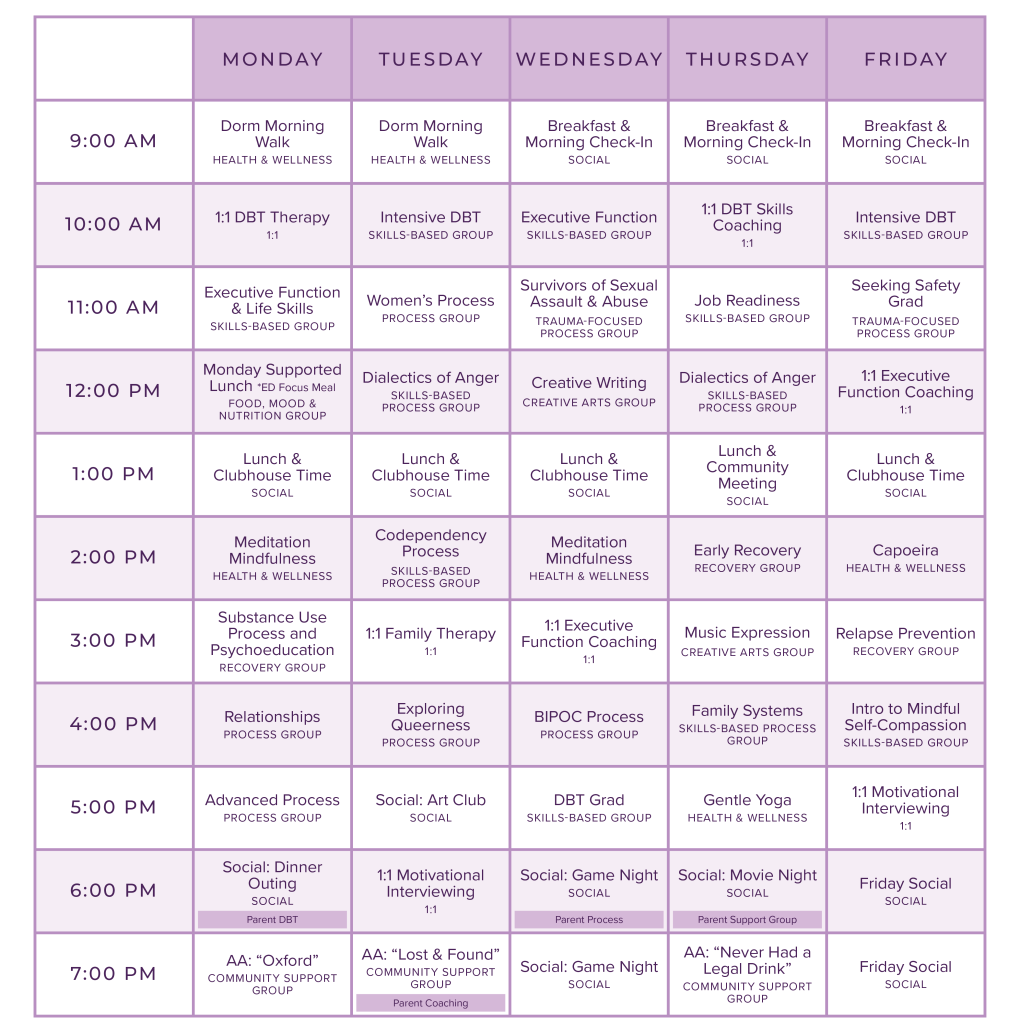
Parent Coaching and Family Therapy
Ken and Zorah’s family coach and therapist supported them in creating manageable goals, expressing their feelings, and better understanding Suki’s struggles.
- Expectation Setting helped Zorah and Ken better understand each other and how they can better support Suki on her sobriety journey.
- Weekly Parent Process Group, a clinician-led forum allowing parents to connect and share their experiences, gave Zorah and Ken a space for reflection.
- Parent DBT Skills Group gave them an opportunity to learn and practice the same DBT skills as Suki. Learning modules like interpersonal effectiveness and emotion regulation, challenged Zorah and Ken, but helped the family create a better dynamic over time.
Community Clubhouse
Suki dreaded the community clubhouse aspect of The Dorm. After years of keeping to herself and taking online classes, she was not interested in making new friends. She reasoned with her parents and coach that she would work in food service to meet new people and engage outside of treatment. Over time, waiting tables helped her feel more at ease talking to people and interacting with unfamiliar faces. Even though Suki started at The Dorm resistant to connection, friendships found her anyway.
Suki Today: Outcomes
When Suki successfully discharged from The Dorm, she transitioned to life as a full-time college student with the support of Zorah and Ken. Conflict still happens, but they’re better at talking it out and seeing each other’s perspective; an outcome the three of them thought impossible at the beginning of treatment.
At college, Suki stays busy with campus clubs and an on-campus job because she realized, while at The Dorm, that structured routine is beneficial for her mental health. With her life back on track, Suki finally feels ready to explore her interests and engage with the world around her – all with the support of Zorah and Ken.