This post recaps a continuing education event hosted by The Dorm, in collaboration with Beck Gee, CADC, AMFT, CEO of Breathe Life Healing Centers, and Jordan Held, LCSW, President & Founder of Relentless Pursuit Therapy & Consulting.
The recent shift in language and attitude towards gender-affirming care and queer identities has left many young adults afraid to be themselves or ask for help. In comparison to their cisgender peers, trans and nonbinary young people are two to three times more likely to experience depression and anxiety, and data from The Trevor Project has shown that almost 50% of gender-diverse individuals have seriously considered suicide within the past year.
These negative mental health outcomes are not a result of a gender-diverse identity, but because of the systematic and social barriers that gender-nonconforming individuals face—as of today, over 850 anti-LGBTQ+ bills are circulating around the United States, and language around LGBTQ+ topics has become increasingly antagonistic.
With the current political climate, it is more important than ever to speak up for queer identities and provide them with the resources they need. This is why we were so grateful to have Beck Gee, CADC, AMFT, CEO of Breathe Life Healing Centers, and Jordan Held, LCSW, President & Founder of Relentless Pursuit Therapy & Consulting, speak about gender-affirming care and the importance of providing a safe space for these individuals.
Gee and Held shared insight into the sociopolitical challenges LGBTQ+ individuals face, and guidance for therapists on how to navigate treatment with gender-diverse clients. The below captures the key points of the presentation.
“Through Science to Justice”: The History of Gender-Affirming Care
To truly provide gender-affirming care, it is crucial to recognize roles of privilege and power dynamics within treatment, and understand the historical prejudice and discrimination that sustains to this day. Learning about past attitudes toward gender-affirming care shines a light on many of the events we’re witnessing today, from the risks of supporting queer identities to the power of advocacy.
“It’s really important to understand, as clinicians, our power and privilege in the therapeutic and organizational space of our clients that are coming in who are trans, nonconforming, or nonbinary, and understanding where we are in this dynamic. We may have different positions of power, and different positions of being marginalized in our own individual way, as do our clients.” – Beck Gee, CADC, AMFT
In history, an early pioneer of research into gender care was Magnus Hirschfeld, a German sexologist and physician who lived from 1868 to 1935. Founder of the Institute for Sexual Science in Berlin, Hirschfeld researched and wrote some of the earliest documentation on working with gender-diverse individuals. During the Nazi regime, much of Hirschfeld’s work was destroyed.
Though he lost most of his life’s work, Hirschfeld still stood by his research and stance on gender-diverse individuals. Etched into his grave are the words “Per Scientium Adjustitium,” which translates to “through science to justice”—a powerful message that still resonates today and inspires Held’s work within the field.
Do you or a loved one need help with mental health?
The Dorm is here.
Understanding History within Today’s Political Climate
Only through learning from history can we grow and avoid past mistakes, emphasized Gee and Held. Here are some parallels they highlighted from Hirschfeld’s time to now:
The politicization of the term “Gender-Affirming Care” and queer identities.
- In history: Works surrounding gender-affirming care were destroyed and called “degenerate,” and the presence of queer identities was equivalent to “moral decline.”
- Today: Everything about queer identities has been politicized, especially in the realms of sports, bathrooms, and healthcare. Similar conversations are occurring around gender-affirming care, calling it “child abuse” and “pseudoscience,” and criminalizing providers who practice it.
Because gender-affirming care has become a sensitive and politicized topic, those who support it are less willing, or even afraid, to be open about it. Anecdotally, Gee has noticed clinicians talking about it less, and treatment centers removing it from their websites.
What needs to be addressed is the fact that because of this politicization, gender-diverse individuals are experiencing increasingly negative mental health outcomes. As Held stated, “It’s not because they’re trans, it’s because society is telling them that they are not valid.”
Language in the news, and the effect on gender-diverse individuals.
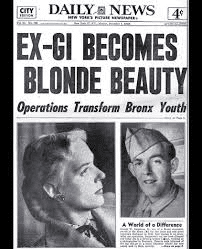
- In history: Gee shared a newspaper article from 1952, which used relatively positive language around gender identity and transition.
- Today: Language like “experiment on children” and “tyranny of the transgender minority” has become commonplace in news and media.
As of 2025, there are at least 850 anti-LGBTQ+ bills across the country. People experience genuine fear of living as themselves in this society because of the language used in these bills and in the media, and how trans identities are talked about.
“Every time there is a bill that someone introduces, that’s a little “t” trauma,” Held shared. “Every time somebody hears, ‘here is another thing that is wrong about trans people, or maybe it’s this, or maybe it’s this’—that’s another little “t” trauma.”
The risk of supporting queer identities, and the fight that continues.
- In history: Hirschfeld was surveilled, attacked, eventually exiled for his work. But even through the immense risk, Hirschfeld still advocated for gender-diverse individuals internationally.
- Today: Educators and clinicians in many states are at risk of investigation or even prosecution for affirming trans identities. However, trans individuals and allies continue to organize, educate, and fight for dignity and access to equal care and opportunities.
“The beautiful thing is, there are so many people who are working tirelessly every day to get through this, and to figure out ways to help people, even when larger systems are breaking down.” – Jordan Held, LCSW
As clinicians, Gee and Held strongly emphasized their role in supporting gender-diverse individuals. They urged clinicians who may not be as specialized to get trained in gender-affirming care, so they can understand how to work with queer clients—not pigeonholing the work to their identity.
Gee and Held also encouraged the audience to think about where they may have an impact—are they on the school board, or active in a volunteer group? “Even little things can create a big ripple effect in this society,” Held emphasized.
Gender-Affirming Care: Myths versus Facts
Myth: Gender-affirming care is unsafe.
- Fact: Gender-affirming care is often life-saving, and has been supported by every major medical and mental health association.
A lot of the misinformation comes from the fact that many articles in the news are opinion pieces. “It’s important to listen to all sides so we know what information is coming in,” Gee said. “But how do we decipher what kind of articles we are reading—if they’re science-based, if they’ve been debunked? The unfortunate reality is that most people don’t have enough time, energy, or even care to look at these kinds of works and the science behind them.”
Myth: Social media is creating a “social contagion” that is making young people transition.
- Fact: Social contagion theory has been repeatedly debunked due to lack of empirical evidence. The internet space actually provides a sense of safety and can be life saving.
Instead of a “contagion,” social media actually presents a possibility, a way for young people to see that there can be a different way to live. It provides representation into a possible future, should they want it.
It’s important to note, additionally, that not all individuals who are trans want to transition medically, and that’s okay. We need to meet people where they’re at in order to best support them.
Myth: Most young people that transition regret it and want to “detransition.”
- Fact: Detransitioning is quite rare. Studies find that rates of detransition and regret are as low as 1-2%.
There is an extensive screening and planning process that goes into a medical transition, especially as a young person.
“You can’t just walk to a local Planned Parenthood and say, ‘give me hormones’—that’s not how this works,” Gee shared. Clinicians will challenge, ask questions, get curious about their client’s identity, and learn about their background before referring them to a gender clinic.
Additionally, regretting a medical, legal, or social transition doesn’t necessarily mean that the individual isn’t transgender. Held shared an example of one of his clients, who didn’t want to change her documents or begin a medical transition because she did not feel safe to do so in today’s society, not because she didn’t identify as female within her own community.
Takeaways for Clinicians
Transgender and gender-diverse individuals face significantly higher mental health risks. Research has demonstrated that trans youth experience 2 to 3 times higher likelihood of depression, anxiety, and suicidal ideation as compared to their cisgender peers. Additionally, according to The Trevor Project, half of trans and nonbinary young people have seriously considered suicide in the past year.
These risks stem from chronic stress, trauma, and lack of support—not from being trans. The Minority Stress Model explains this increased risk as a result of the prejudice, discrimination, and bullying queer and other minority groups face, leading gender-diverse individuals to be hypervigilant, on edge, and always navigating judgment. “There are no breaks,” Gee expressed.
Unfortunately, discrimination exists within mental health care settings, too. Barriers to affirming care often exacerbates distress in gender-diverse individuals, while access to gender-affirming care lowers suicidality, increases mood and self-image, and promotes better functioning. In the clinical space, mental health providers must get comfortable talking about gender, asking more (and better) questions, and seeking supervision to stay grounded and effective.
Supportive adults play a crucial protective role. Just one affirming adult can reduce trans youth risk of suicide by over 40%. Being supportive doesn’t have to look like making big, life-changing decisions, but begins with showing up, asking questions, listening deeply, and creating emotionally safe spaces.
We thank Beck Gee and Jordan Held for sharing their expertise. The full recording of the event is available on our Youtube channel.
For more about how The Dorm supports gender-diverse clients, visit our blog post interviewing Lead Senior Therapist Maddox Emerick, LMSW, or watch the full interview video on Youtube.
Recommended Resources
- Eldorado: Everything the Nazis Hate: This documentary explores the iconic Eldorado nightclub in 1920s Berlin—a vibrant, glamorous refuge for the queer community during the Weimar Republic. Through archival footage and personal stories, it examines how this era of sexual freedom and cultural openness was systematically destroyed with the rise of the Nazi regime, reflecting on the lives lost and liberties stripped away.
- Medical Care of Trans and Gender Diverse Adults (Spring 2021): A clinical guide from Fenway Health’s Transgender Health Program designed to support healthcare providers in offering affirming, comprehensive, evidence-based care to transgender and gender-diverse (TGD) adults, regardless of whether patients pursue medical transition