Introduction
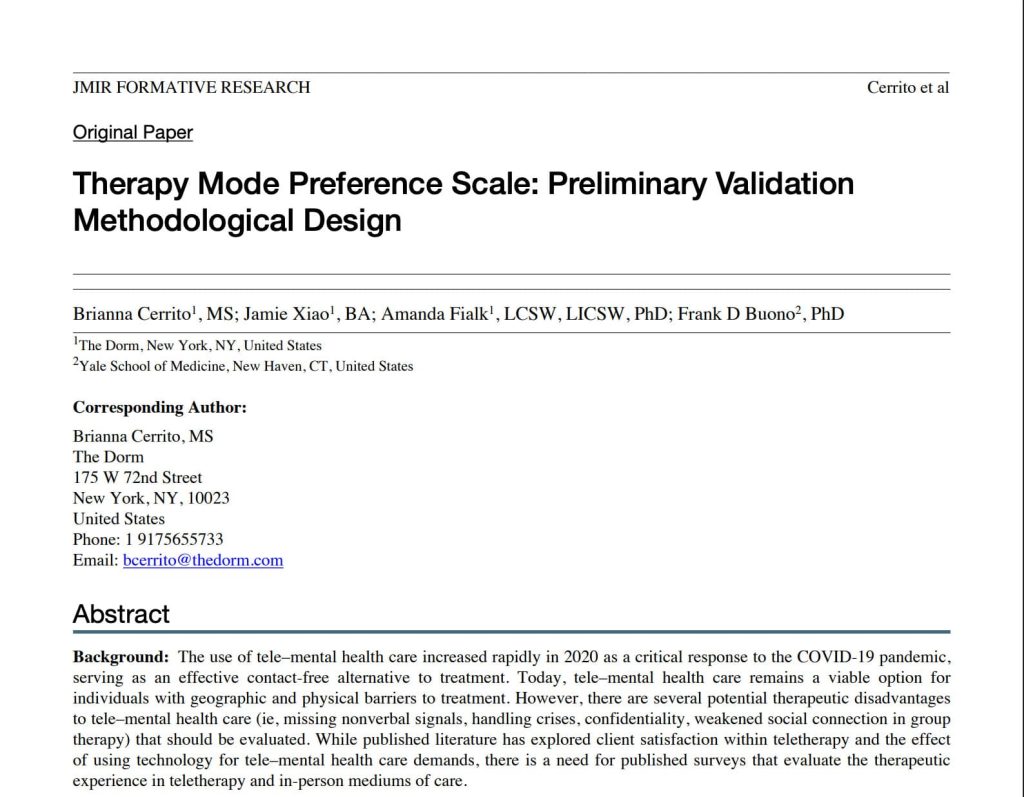
The COVID-19 pandemic accelerated the expansion of telehealth and reshaped how mental health care is delivered. To better understand how treatment modality, including virtual and in-person care, influences the therapeutic process, this study developed and preliminarily validated the Therapy Mode Preference Scale, a survey designed to assess how care setting impacts key therapeutic factors such as therapeutic alliance, engagement, rapport, and confidentiality.
As a result of The Dorm’s in-person treatment approach:
75% Clients feel more connected to their therapist.
Summary of Findings
The survey was administered to 89 clients who had experienced both teletherapy and in-person care at The Dorm between April 2020 and June 2022. Psychometric analysis identified a 14-item, three-factor structure that accounted for 61 percent of the total variance and demonstrated satisfactory internal consistency, with a Cronbach’s alpha of 0.71.
These findings provide early evidence supporting the Therapy Mode Preference Scale as a reliable tool for assessing how care setting influences the therapeutic experience. Continued validation across broader and more diverse populations will help clinicians and programs better tailor treatment delivery to the evolving needs of young adults.