Introduction
As the landscape of mental health care continues to evolve, understanding how virtual and in-person therapy shape the therapeutic experience has become increasingly important. This qualitative study explored the benefits and challenges of each treatment modality from the perspectives of both clients and clinicians, with particular attention to how therapeutic connection, engagement, and continuity of care are influenced by treatment setting.
As a result of The Dorm’s in-person treatment approach:
75% Clients feel more connected to their therapist.
Summary of Findings
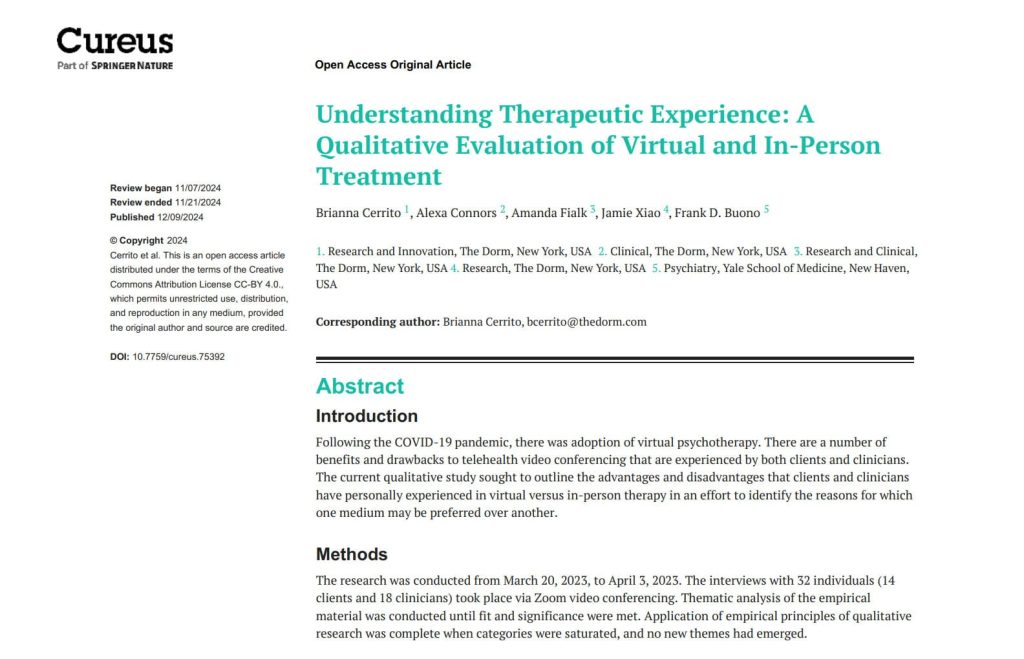
Through qualitative interviews conducted via Zoom, participants described their experiences with virtual and in-person intensive outpatient therapy. Thematic analysis indicated that virtual therapy offers meaningful flexibility, enabling clients to maintain continuity of care despite barriers such as illness, travel, and scheduling conflicts.
In contrast, in-person therapy was consistently described as strengthening key therapeutic factors, including client engagement, participation, nonverbal communication, and rapport-building with both clinicians and peers. Participants noted that shared physical space supported deeper interpersonal connection and more spontaneous interaction.
While the findings do not suggest that one treatment format is clinically superior, they emphasize the importance of tailoring treatment delivery to individual needs and preferences. Together, these results highlight the value of offering both virtual and in-person modalities to support accessible, personalized, and effective mental health care.