
Introduction
The rapid expansion of virtual therapy has transformed how clients and clinicians connect, communicate, and build rapport. This qualitative study examines how the Therapeutic Alliance, defined as the collaborative and trust-based relationship between client and clinician, differs across virtual and in-person mental health care settings. Drawing on interviews conducted at The Dorm, the study explores how treatment setting influences rapport-building, community connection, and clinical effectiveness, as well as how client acuity and diagnosis shape perceptions of safety, engagement, and overall treatment success.
Summary of Findings
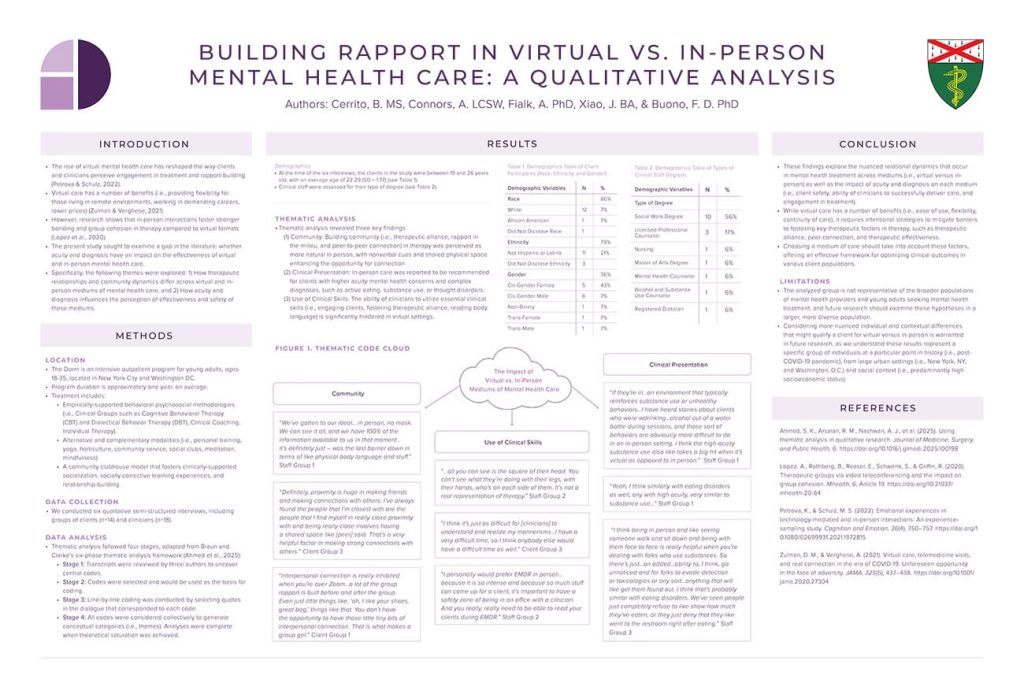
Through six qualitative, semi-structured interviews with clients (n=14) and clinicians (n=18), three key themes emerged.
- Community and Connection: In-person mental health care more naturally fostered community. Shared physical space, access to nonverbal communication, and spontaneous moments of connection, such as informal conversations before and after group sessions, were reported to strengthen rapport and peer relationships
- Clinical Presentation: Clinicians reported greater difficulty reading body language, managing safety concerns, and fully engaging clients in virtual settings due to limited visual, physical, and environmental cues. These constraints were described as particularly impactful when working with higher-risk clinical presentations
- Use of Clinical Skills: Both clients and clinicians described limitations in how effectively clinical skills could be applied in virtual settings. Clinicians noted that reduced visibility of body language, posture, and environmental context made it more difficult to assess emotional states, monitor behavioral cues, and respond in real time to shifts in client affect. These constraints were described as particularly relevant for modalities requiring close attunement and observation (e.g., EMDR).
As a result of The Dorm’s in-person treatment approach:
75% clients feel more connected to their therapist
Overall Implications
Overall, the findings suggest that while virtual mental health care offers important flexibility and accessibility, it requires intentional strategies to preserve the Therapeutic Alliance, safety, and client engagement. Selecting a care modality that accounts for diagnosis, acuity, and individual needs may help optimize treatment outcomes and support meaningful connection across treatment settings.


