
Introduction
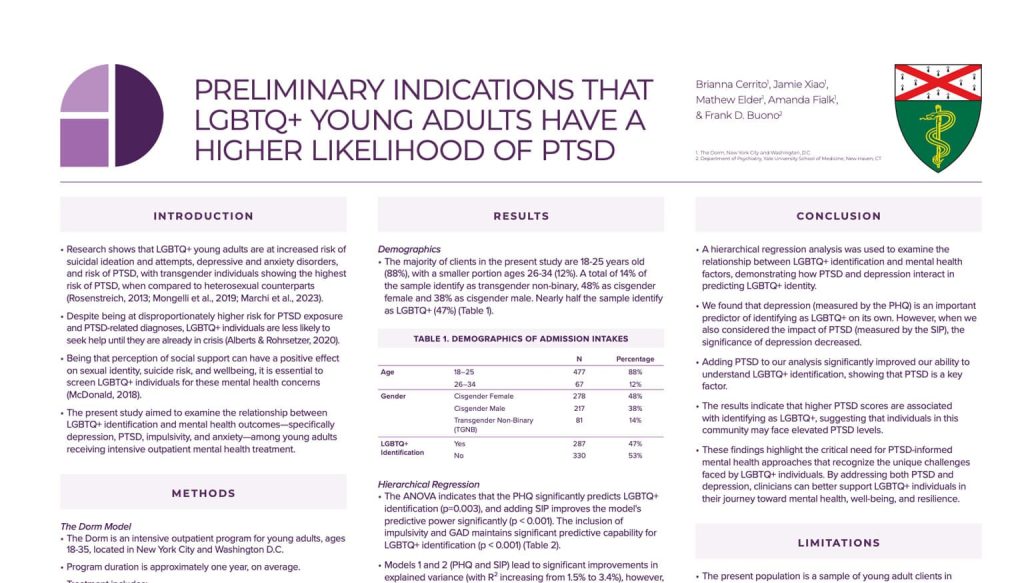
LGBTQ+ young adults face distinct mental health challenges and experience higher rates of depression, anxiety, and post-traumatic stress disorder (PTSD) compared to their non-LGBTQ+ peers. Research also indicates that this population is less likely to seek support until symptoms escalate to a point of crisis. Recognizing these disparities, this study examined how trauma exposure influences mental health outcomes among LGBTQ+ individuals receiving care in intensive outpatient treatment settings.
Summary of Findings
Using standardized self-report measures, we assessed symptoms of depression, anxiety, PTSD, and impulsivity among young adults in intensive outpatient treatment. Results demonstrated a strong association between trauma exposure and LGBTQ+ identity, with trauma emerging as a key factor contributing to higher levels of emotional distress, including anxiety and depression, as well as increased impulsivity within this population.
These findings underscore the importance of early screening, trauma-informed care, and individualized interventions tailored to the needs of LGBTQ+ clients. Continued research is needed to better understand the protective and moderating factors that support resilience and long-term treatment outcomes.
50% of The Dorm clients identify as LGBTQ+


