


Presenting Problems
Rhea admitted to The Dorm with diagnoses of depression, anxiety, bipolar disorder, and borderline personality disorder (BPD). After a traumatic childhood experience, Rhea began participating in outpatient and family therapy from a young age. She struggled with building and maintaining relationships without falling back on co-dependent tendencies, and sustaining affirming connections as she explored her LGBTQ+ identity.
Treatment and Life Goals
During her time at The Dorm, Rhea strove to:
- Build and maintain a healthier relationship with herself and others
- Feel more affirmed
- Learn and practice emotion regulation strategies
Treatment Plan and Recovery Journey
Individual Therapy
To address co-dependency in many of her relationships, Rhea’s therapist integrated Dialectical Behavioral Therapy (DBT) as a key intervention to support Rhea in learning the key modules of emotional regulation, interpersonal effectiveness, and boundary setting.
Clinical Coaching
Through clinical coaching sessions, Rhea learned skills to better regulate her emotions in various situations and effectively set healthier boundaries. She found tremendous support through role-playing conversations with her coach, practicing discussions with which she would have to set boundaries, and scripting out responses to potential real-world scenarios.
Group Therapy
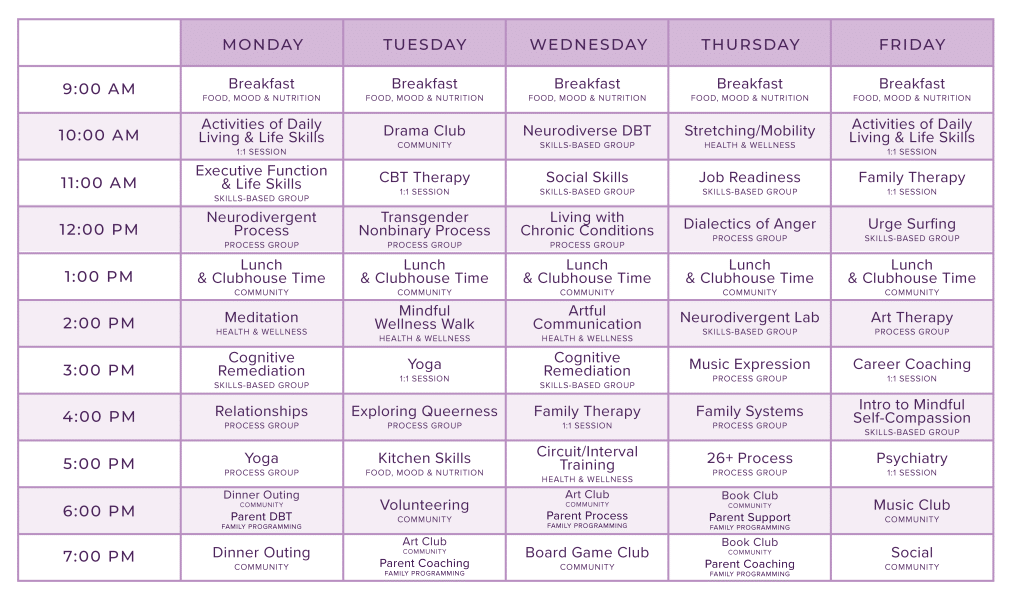
Rhea was very engaged in skills-based groups, taking notes throughout the sessions to better integrate and apply what she learned into her daily life. Some group standouts included:
- Dialectic Behavioral Therapy (DBT) Skills Group, to refresh skills learned in her therapy and coaching sessions, as well as digest feedback from her peers.
- Seeking Safety Group, a group designed for clients who have experienced trauma.
- Identity & Sexuality Group, a client-led process group for clients who are LGBTQ+, which gave her further identity affirmation.
Rhea’s Group Schedule
Nutritional Programming
Rhea worked with a dietitian to address her ongoing struggles with food, which became apparent during her time at The Dorm. Rhea’s dietitian guided her through Intuitive Eating, and helped her be more in tune with her body’s fullness and hunger cues.
Community Clubhouse
While at The Dorm, Rhea was heavily involved in the community and acted as a community leader for other Dorm clients. Those who worked closely with her called her the “life of the party,” as she would always garner client interest around various events. Rhea’s honesty and openness towards being in treatment, along with her dedication to focusing on making the decisions that would be best for her, allowed her to make the most out of her time at The Dorm (and inspire her peers!).
Parent Coaching and Family Therapy
Rhea’s codependent tendencies were apparent in her relationship with her mother. Rhea’s treatment team worked extensively with her mother on setting and maintaining boundaries, as well as providing her with the skills to effectively communicate her needs. This includes the DEARMAN skill, which assists with interpersonal communication.
Health & Wellness
As a transgender woman who had already transitioned socially, Rhea also considered beginning her medical transition while in treatment at The Dorm. Her treatment team supported her through the medical application process, provided her with various LGBTQ+ and TGNB resources, and invited her to get involved with her local LGBTQ+ community.
Rhea Today: Outcomes
- Today, Rhea holds a full-time position in the food and services industry and is actively thinking about her overall career and where best she can apply her skills. Rhea is working towardsfull independence from her parents, and is steadily making gains in making autonomous decisions.
- Her close bonds formed with other Dorm clients were seen as a pillar of success that kept her grounded during treatment, and her lasting relationships with them are still strong even after her discharge. She is also taking steps to maintain her well-being through setting up appointments to receive gender-affirming and behavioral healthcare.