Logan (he/him) joined The Dorm seeking additional in-person support close to school. With a history of ADHD and executive functioning challenges, he wanted academic support and the opportunity to process trauma while learning better coping skills. Most of all, he longed to embrace and celebrate his ADHD identity—shifting from seeing it as a burden to recognizing it as a distinctive strength.
Treatment & Life Goals
Logan came to The Dorm following ups and downs managing ADHD and executive functioning that made it hard to balance academics and independence. Very quickly, he felt trapped and stuck.
Drawn to The Dorm’s neurodiversity-affirming model, Logan was excited to find a space where academic coaching, therapy, and community could help him transform what he had long been told and experienced as challenges stemming from his ADHD, into opportunities for growth and success.
- Embrace and “get curious” about ADHD diagnosis
- Increase coping skills, ADLs, and executive functioning
- Find success in school (i.e., attend classes, participate in clubs and activities)
- Develop closer relationships and friendships with like-minded people
- Feel more empowered and foster greater independence
Treatment Plan & Recovery Journey
Individual Therapy
Logan worked with his therapist using a combination of Motivational Interviewing (MI), Solution-Focused Therapy, and Cognitive Behavioral Therapy (CBT):
- MI was used to strengthen his intrinsic motivation to change, especially when hopelessness or ambivalence surfaced.
- Solution-Focused Therapy allowed Logan to practice identifying small, achievable steps toward his goals, which helped him feel a sense of progress.
- CBT allowed him to examine the negative thought patterns tied to depression and anxiety, and to reframe these thought patterns in ways that reduced their hold on his daily functioning.
- His therapist also incorporated behavioral reinforcement strategies, helping Logan recognize and celebrate progress, no matter how small or incremental, to maintain momentum in his recovery.
Clinical Coaching
Clinical coaching sessions complemented individual sessions by focusing on practical skills and daily functioning. Executive functioning coaching was central in addressing Logan’s challenges with organization, prioritization, and follow-through. With his coach, Logan practiced breaking down larger projects into manageable steps, blocking time for focused work, and built routines to reduce procrastination. Together, they created accountability systems to help him stay on track with university studies and personal responsibilities.
Coaching also drew from behavioral reinforcement techniques where Logan learned to reward himself for effort and consistency rather than perfection. This shift supported his confidence and created healthier patterns of self-regulation.
Parent Coaching & Family Therapy
Family work was incorporated through family coaching, with sessions focused on strengthening communication and fostering healthier relational dynamics. Logan and his parents engaged in intermittent joint sessions alongside individual parent coaching, which created space for collaborative goal-setting across the family unit.
By emphasizing skill-building around boundary-setting, conflict resolution, and supportive structures at home, these sessions not only improved family interactions but also reinforced Logan’s empowered ADHD identity, helping him feel more embraced and confident.
Group Therapy
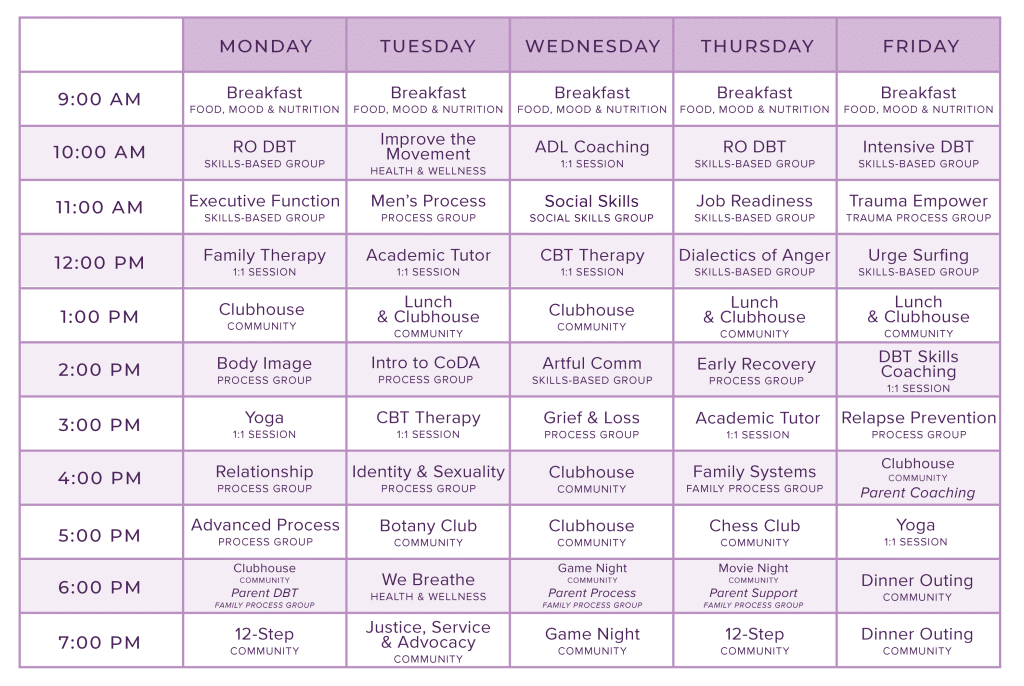
Logan engaged in a wide range of groups that supported both his emotional growth and daily living skills.
- Neurodiverse DBT: a unique space where Logan could practice DBT skills in a supportive, neurodiverse-oriented community that honed in on strengths-based adaptations of Marsha Linehan’s DBT to build confidence and accountability.
- Neurodiverse Process & Lab: a group where Logan could explore unmasking and emotional regulation during immersive, real-world interactions with his peers and clinical team. This weekly clinical experience transformed how Logan moved through the world with strength and self-belief.
- Managing Emotions & CBT Groups: offered tools to regulate emotions, challenge negative thoughts, and build healthier coping strategies.
- Cooking Skills & Learning Lab Spaces: hands-on opportunities to build independence and apply practical skills.
- Job Readiness: helped him prepare for employment through skill development and confidence-building.
- Wellness Walks & Meditation: restorative practices that support balance and overall well-being.
Logan’s Group Schedule
Community Clubhouse
Logan found The Dorm’s clubhouse to be a vital part of his treatment experience. He actively participated in Music Club, Book Club, and Chess Club, which not only allowed him to explore his interests but also helped him form meaningful friendships that extended beyond the program.
Being surrounded by peers who also navigated attention challenges was especially impactful. Seeing others with ADHD manage school, work, and relationships showed Logan that his struggles did not have to limit him. The community affirmed his identity, gave him a sense of belonging, and helped him embrace strategies for thriving rather than feeling like something was “wrong” with him.
The Turning Points in Treatment
A major turning point came when Logan enrolled in a college class while also balancing his internship and a lower level of treatment. The fuller plate pushed him to apply the skills he was learning at The Dorm, reflect on what worked, and adapt his strategies when needed. For instance, when his sticky-note tracking system for assignments proved ineffective, he redesigned it to better match his workflow, an important example of resilience and problem-solving.
Logan’s clinical coach greatly supported his recovery by helping him advocate for academic accommodations at university and offering in-person support at Logan’s apartment when needed. The Dorm’s urban setting allowed Logan to independently commute between The Dorm, school, and his internship, reinforcing daily autonomy.
Logan Today: Outcomes
Logan is now thriving, successfully balancing his studies with an internship he began during treatment. He has harnessed his ADHD as a superpower, using effective tools and techniques to fuel his creativity, resilience, and drive—rather than relying on old systems that no longer served him. Logan maintains his mental wellness through consistent routines, prioritizing movement, sleep, friendships, and practical self-care.