


Violet came to The Dorm after taking a leave from college to focus on her mental health. Following a hospitalization for anxiety and alcohol use disorder, she struggled with managing chronic anxiety symptoms in other treatment centers that had been solely focused on addressing her substance use. At The Dorm, she sought something new.
Treatment and Life Goals
During her course of treatment at The Dorm, Violet aimed to:
- Learn skills to cope with longstanding anxiety
- Sustain her sobriety
- Work on returning to school
Treatment Plan & Recovery Journey
Individual Therapy
- Cognitive Behavioral Therapy (CBT) assisted Violet with changing maladaptive thoughts and behaviors that had for so long perpetuated her anxiety and contributed to her desire to use substances to numb and withdraw.
- Dialectical Behavioral Therapy (DBT) was used to address her struggles with emotional regulation, enhance her resilience, and strengthen her ability to cope with cravings and difficult life situations. By investing energy into developing new skills and addressing underlying mental health issues, she was better able to reinforce her commitment to sobriety.
- Psychodynamic therapy promoted improved self-reflection and helped Violet discover her innermost motivations for maintaining recovery.
Clinical Coaching
- Violet found the day-to-day clinical coaching and accountability at The Dorm extremely helpful, and different from any other prior treatment experience. Through clinical coaching, Violet learned to apply various coping strategies into daily life. When her anxiety symptoms became overwhelming, for example, she could employ the “What” DBT skill, taking a moment to observe, describe, and ground herself in the current situation.
- Also present in coaching sessions was the reminder that sobriety is the foundation for further mental health recovery. Maintaining sobriety was key to working on her anxiety symptoms, giving her brain more flexibility to process her anxiety as well as gain and implement skills to address her symptoms.
Parent Coaching and Family Therapy
Both of Violet’s parents participated in weekly parent coaching sessions, where they worked to be supportive and affirming in Violet’s recovery journey, changing their habits at home to promote her mental health recovery and sobriety.
Group Therapy
Violet participated in many group therapy sessions, including:
- Comprehensive DBT Group, where Violet was able to reinforce skills learned in coaching sessions with a community of peers navigating a diverse range of challenges.
- Recovery Group and Relapse Prevention Group, where she built relationships with peers navigating a similar journey with sobriety, establishing a solid base for continued healing and growth.
- Seeking Safety Group, a group geared towards clients who have experienced different forms of trauma. In this group, Violet was able to find and learn ways to feel safe in overwhelming situations.
- The Dorm’s young adult focused Alcoholics Anonymous (AA) group, where clients lead sessions and give each other mutual support and feedback.
Violet’s Group Schedule
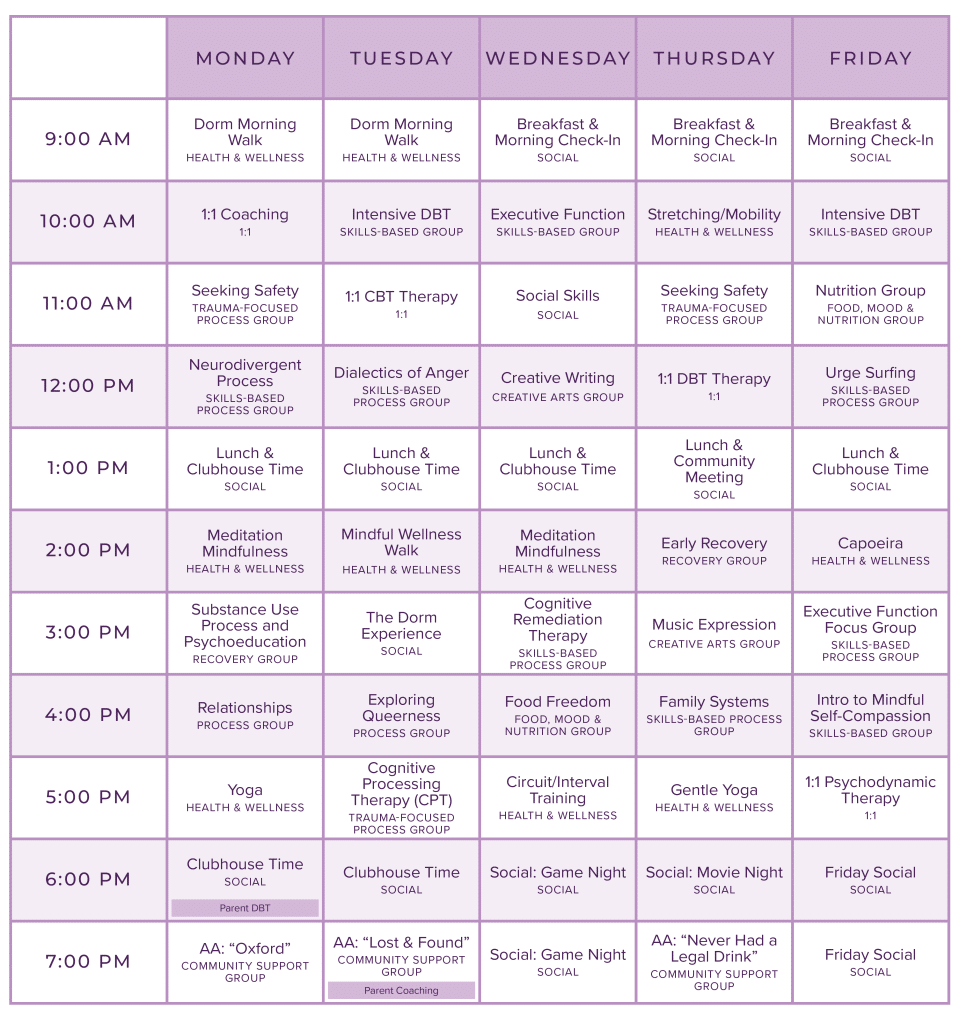
Community Clubhouse
- The Dorm’s community model was especially beneficial for Violet’s recovery. She was able to find common ground with peers navigating both similar but also different mental health journeys, creating connections that went beyond just substance use challenges.
- With time, she began making close friendships with other clients who helped keep her accountable. As she continued treatment at The Dorm, Violet began attending off-site AA groups and participated in local sober activities. The support and camaraderie from clinicians, clients, and her larger community allowed Violet to reach significant sobriety milestones, such as hitting the one-year sober mark during her course of treatment.
Academic, Careers and Vocational Support
With support and guidance from her treatment team, Violet ultimately decided not to return to her previous school where her anxiety and alcohol use occurred, and instead transition to a different college environment where there were less associations with her mental health triggers. This allowed her to build new, stronger relationships with peers who understood and encouraged her recovery, rather than falling back into previous maladaptive cycles.
Violet Today: Outcomes
Today, Violet is a full-time student at a new college, where she has found a strong support system. She actively employs skills to manage her anxiety, boasts over 600 days of sobriety through regular attendance at local AA meetings, and maintains a positive relationship with her parents.
After her time at The Dorm, Violet had learned the importance of sobriety for overall greater health and well-being. In her words, “Nothing feels better than knowing I’m sober and I never thought I’d get here in a program that wasn’t just for ‘addiction.’ I love having this part of me, something that’s mine that I carry inside.”